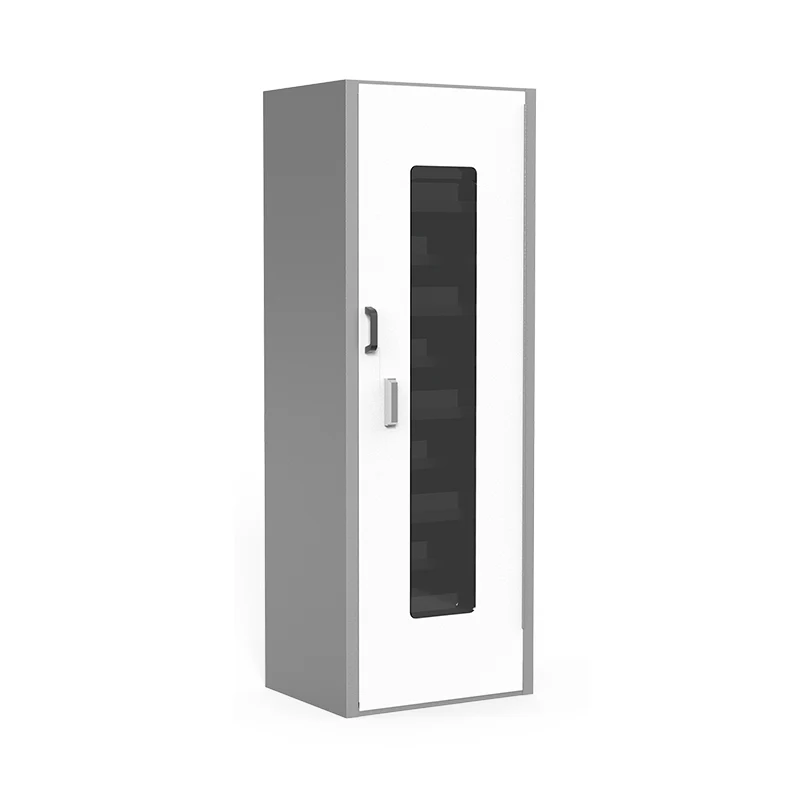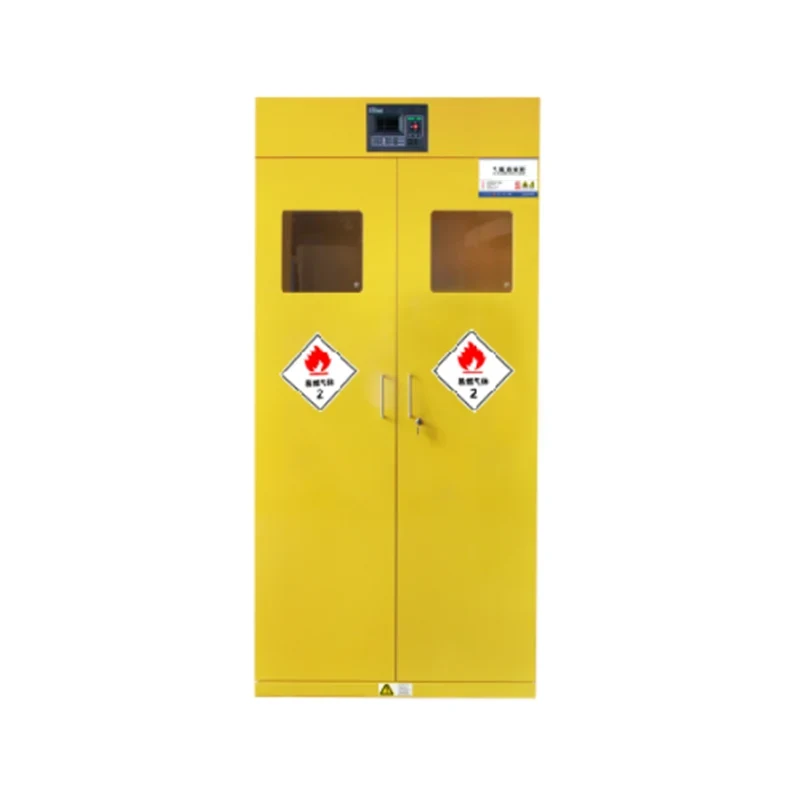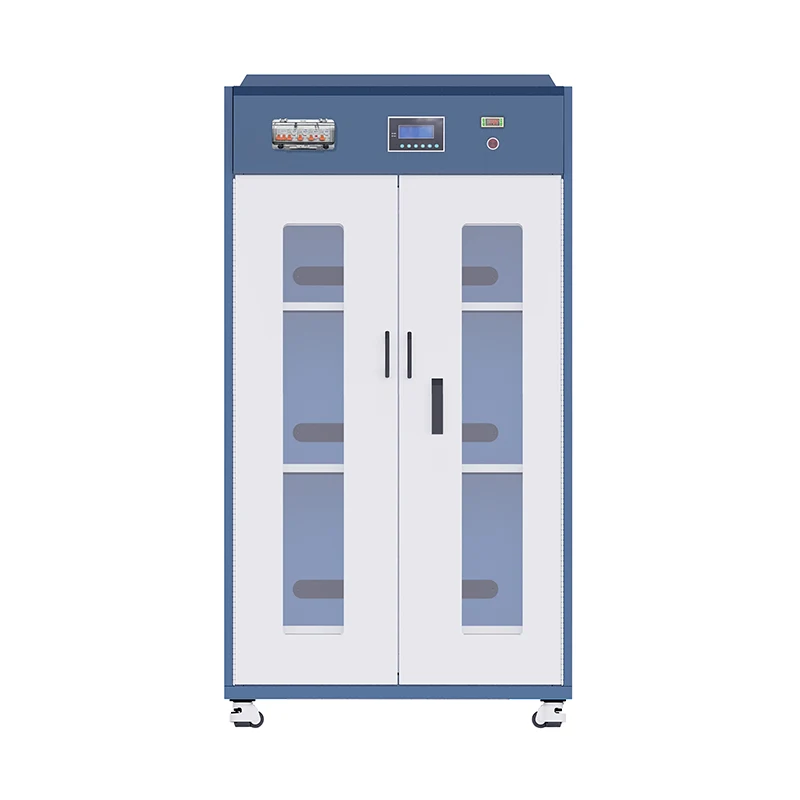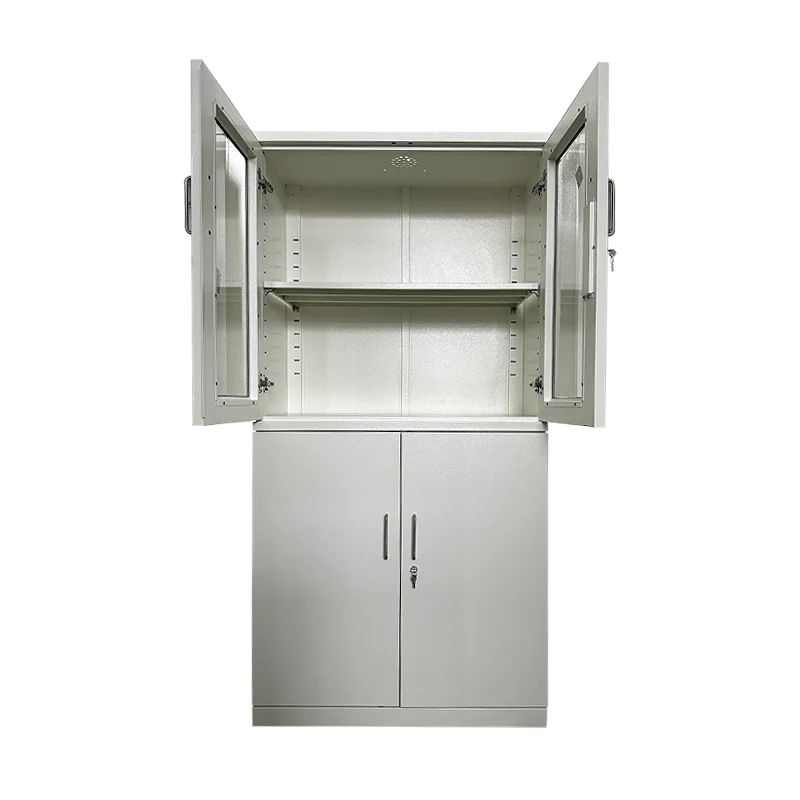

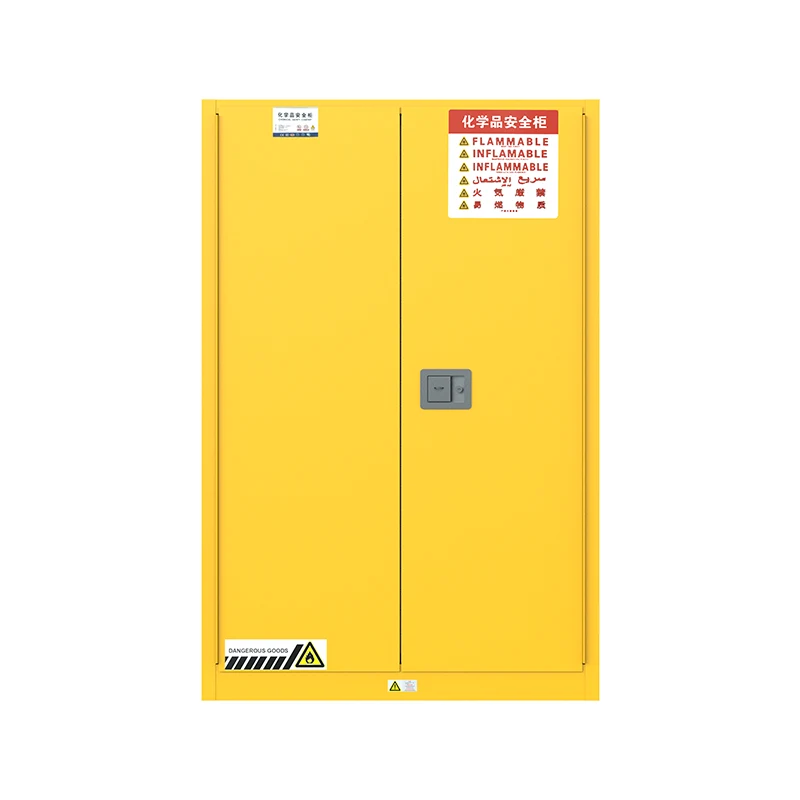
A properly designed 45 Gallon Flammable Liquid and Chemicals Safety Storage Cabinet does more than provide organized storage. It creates a controlled place for flammable liquids and compatible chemicals, helps reduce exposure to spills and ignition sources, and supports safer daily handling in laboratories, manufacturing facilities, maintenance areas, workshops, and other industrial environments.
Article Summary
A 45-gallon safety storage cabinet is designed for workplaces that need substantial on-site storage without moving hazardous liquids into a separate storage room. The right cabinet should provide suitable fire-resistant construction, secure doors, spill containment, clear labeling, practical internal organization, and compatibility with the liquids being stored. Capacity alone is not enough: users must also consider liquid classification, container size, segregation requirements, workplace layout, inspection routines, and applicable local regulations.
Table of Contents
- What Is a 45 Gallon Safety Storage Cabinet?
- What Workplace Problems Does It Address?
- What Construction Features Matter Most?
- What Does the 45-Gallon Capacity Mean?
- What Should Be Considered When Organizing Chemicals?
- What Should Buyers Check Before Purchasing?
- What Storage Practices Improve Workplace Safety?
- What Industries Can Use This Type of Cabinet?
- Why Consider Guangsheng Technology Wuxi Co., Ltd.?
- Frequently Asked Questions
- What Should Businesses Remember?
What Is a 45 Gallon Safety Storage Cabinet?
A 45 Gallon Flammable Liquid and Chemicals Safety Storage Cabinet is a dedicated storage unit intended to keep containers of flammable liquids and suitable chemical products in a controlled, clearly identified location. The 45-gallon size provides more usable capacity than compact under-bench cabinets while remaining practical for many production areas, laboratories, maintenance departments, and workshops.
The purpose is not simply to place chemical containers behind a door. A properly engineered cabinet is intended to provide a physical barrier, organize containers, contain minor leakage, and help reduce the consequences of a fire involving stored liquids.
For workplaces operating under U.S. OSHA requirements, the applicable rules specify cabinet capacity and construction requirements. For example, OSHA 29 CFR 1910.106 states that a storage cabinet may hold no more than 60 gallons of Category 1, 2, or 3 flammable liquids, or 120 gallons of Category 4 flammable liquids.
This means a nominal 45-gallon cabinet is not automatically suitable for every possible chemical combination. The actual materials, classifications, containers, quantity limits, and applicable local requirements must always be considered together.
What Workplace Problems Does It Address?
Businesses that handle solvents, paints, fuels, cleaning agents, laboratory reagents, coatings, or other flammable liquids often face the same practical challenge: materials need to remain accessible without creating unnecessary hazards around employees and equipment.
Uncontrolled Storage
Containers left on floors, benches, shelves, or production areas can make housekeeping and inventory control more difficult.
Spill Exposure
Secondary containment helps keep accidental leakage from immediately spreading across a work surface or floor.
Ignition Risk
Dedicated storage separates hazardous liquids from normal workplace activities and helps maintain a more controlled storage environment.
Poor Organization
Adjustable shelves and dedicated storage zones make it easier to identify, access, and monitor containers.
OSHA also requires that flammable liquids not be stored in a way that restricts exits, stairways, or areas normally used for safe egress. Therefore, cabinet placement is just as important as cabinet construction.
What Construction Features Matter Most?
When purchasing a safety cabinet, buyers should look beyond appearance, color, and nominal capacity. Construction details influence how the cabinet performs during everyday use and under fire exposure.
| Feature | Why It Matters |
|---|---|
| Double-wall construction | Creates an insulating air space that can help limit heat transfer during fire exposure. |
| Strong steel body | Provides structural durability for industrial environments. |
| Secure door and locking mechanism | Helps keep containers protected and limits unauthorized access. |
| Raised leak-catching sump | Provides secondary containment for leaks and spills. |
| Adjustable shelving | Allows different container sizes to be stored more efficiently. |
| Visible warning labels | Makes the cabinet's purpose immediately recognizable. |
OSHA specifies that compliant metal cabinets can use No. 18-gauge sheet steel with double walls separated by a 1.5-inch air space, with tight joints, a three-point lock, and a raised door sill. The regulation also specifies a fire-resistance test under which the cabinet must limit internal temperature to 325°F during a 10-minute fire exposure.
These specifications illustrate an important point: a safety cabinet should be evaluated according to its engineering and applicable standards rather than simply by its advertised gallon capacity.
What Does the 45-Gallon Capacity Mean?
The phrase “45 gallon” generally describes the cabinet's nominal storage capacity, not a recommendation to fill the cabinet to the maximum physical volume with any combination of chemicals.
For example, container dimensions, shelf spacing, packaging type, liquid classification, compatibility, and required segregation can all reduce the practical amount of material that should be stored in one cabinet.
Cabinet capacity, legal storage limits, and the amount that can be safely organized inside the cabinet are related but not identical concepts.
OSHA's general-industry rule establishes maximum quantities for a storage cabinet, while construction-industry requirements under 29 CFR 1926.152 also limit a cabinet to 60 gallons of Category 1, 2, and/or 3 flammable liquids or 120 gallons of Category 4 flammable liquids, with additional limits on the number of cabinets in a storage area.
For this reason, facility managers should verify the specific regulatory framework applicable to their site before determining the cabinet's allowable load.
What Should Be Considered When Organizing Chemicals?
A cabinet becomes much more useful when its internal layout supports safe daily work. Poor organization can lead to damaged containers, blocked access, forgotten products, and accidental mixing of incompatible substances.
1. Identify the Contents
Maintain clear product identification and consult the manufacturer's Safety Data Sheet for storage requirements, incompatibilities, temperature limitations, and handling precautions.
2. Separate Incompatible Materials
Do not assume that all chemicals can be stored together simply because they fit inside the same cabinet. Flammable liquids, oxidizers, corrosives, reactive chemicals, and other hazardous materials may require different storage arrangements.
3. Keep Containers Stable
Shelves should be strong enough for the intended load and arranged so that containers remain stable during routine access. Heavy containers should be positioned carefully to reduce the chance of falling or tipping.
4. Maintain Clear Identification
Labels should remain visible, readable, and consistent with the workplace's chemical management system. A clearly marked cabinet also helps employees recognize the storage area quickly.
5. Avoid Overloading
More material inside a cabinet does not necessarily mean better storage efficiency. Leave sufficient space for safe access, inspection, and proper arrangement.
What Should Buyers Check Before Purchasing?
Purchasing teams often focus on price and capacity first. For hazardous-liquid storage, a more complete evaluation can prevent costly mismatches later.
- Capacity: Confirm that the cabinet size matches the site's actual storage requirements.
- Material: Check the body and shelf construction for the intended industrial environment.
- Fire resistance: Review applicable test standards and manufacturer documentation.
- Door design: Consider manual or self-closing configurations according to the application.
- Containment: Check whether the cabinet includes a suitable leak-catching sump.
- Internal layout: Confirm shelf dimensions, adjustability, and load capacity.
- Labels: Ensure hazard markings are clear and durable.
- Compliance documentation: Ask for relevant specifications, testing information, and certifications where applicable.
- Installation: Verify footprint, access clearance, floor condition, and anchoring requirements.
- After-sales support: Consider replacement parts, technical documentation, and service response.
For international buyers, it is particularly important to confirm which standards apply in the destination country or facility. A cabinet designed for one regulatory environment should not automatically be assumed to satisfy every local requirement.
What Storage Practices Improve Workplace Safety?
Even a well-designed cabinet cannot replace good chemical-management practices. Safe storage depends on the combination of equipment, procedures, employee training, and regular inspection.
- Keep the cabinet closed when not in use. This helps maintain controlled access and prevents unnecessary exposure.
- Inspect containers regularly. Look for corrosion, damaged caps, swelling, cracks, or signs of leakage.
- Remove damaged containers promptly. Follow the facility's hazardous-material response procedure rather than continuing to store a compromised container.
- Keep ignition sources away. Storage areas should be planned to reduce exposure to flames, sparks, and other potential ignition sources.
- Maintain housekeeping. Keep the surrounding area clear and do not block emergency routes.
- Control inventory. Store only the quantity needed for the operation and dispose of obsolete materials according to applicable procedures.
- Train employees. Workers should understand container labels, SDS information, storage compatibility, spill response, and emergency procedures.
OSHA specifically states that flammable liquids should not be stored where they restrict exits, stairways, or areas normally used for safe egress.
What Industries Can Use This Type of Cabinet?
The practical applications of a 45-gallon flammable liquid cabinet extend across many working environments where controlled chemical storage is necessary.
| Application | Typical Storage Needs |
|---|---|
| Manufacturing | Solvents, coatings, cleaning liquids, and process chemicals. |
| Laboratories | Controlled storage of compatible flammable reagents and solvents. |
| Automotive Service | Flammable fluids, cleaners, coatings, and maintenance chemicals. |
| Maintenance Departments | Lubricants, solvents, paints, and service-related materials. |
| Educational Facilities | Laboratory and workshop chemicals requiring controlled storage. |
Why Consider Guangsheng Technology Wuxi Co., Ltd.?
For businesses sourcing industrial safety storage equipment, product selection often involves more than choosing a standard cabinet from a catalog. Facility layout, container dimensions, storage volume, working environment, regulatory requirements, and purchasing specifications can all influence the final configuration.
Guangsheng Technology Wuxi Co., Ltd. can serve buyers looking for practical chemical and flammable-liquid storage solutions with attention to product structure, storage requirements, and application conditions.
When evaluating a supplier, buyers should request detailed product specifications rather than relying only on a product name or nominal capacity. Useful documentation can include cabinet dimensions, material thickness, shelf load capacity, door configuration, containment design, applicable testing information, packaging details, installation guidance, and available customization options.
Before placing a bulk order, provide the supplier with the target market, chemical categories, container sizes, required capacity, installation environment, quantity, and applicable standards. This gives both sides a clearer basis for confirming the appropriate cabinet configuration.
Frequently Asked Questions
Can a 45-gallon cabinet store 45 gallons of flammable liquid?
The cabinet's nominal 45-gallon capacity does not automatically mean that every combination of liquids can be stored up to exactly 45 gallons. Applicable regulations, liquid classification, container type, cabinet design, compatibility, and facility-specific requirements must all be checked.
Is a flammable liquid cabinet required for every chemical?
No. Storage requirements depend on the chemical's properties and classification. Flammable liquids, corrosives, oxidizers, reactive substances, and other hazardous materials may require different storage solutions.
Does the cabinet need ventilation?
Ventilation requirements depend on the applicable standard, cabinet design, chemical type, and facility conditions. OSHA's requirements for ventilation specifically address inside storage rooms and other operations; buyers should not assume that adding or removing cabinet vents automatically makes a cabinet safer.
Can different flammable liquids be stored in the same cabinet?
Potentially, but compatibility and applicable storage limits must be evaluated. OSHA has clarified that its rules do not categorically prohibit intermingling flammable and combustible liquids, while also making clear that storage limits still apply.
Why is secondary containment important?
A containment sump can help capture leaked liquid and reduce the chance that a spill immediately spreads beyond the cabinet. It should be treated as part of a broader spill-prevention and emergency-response program.
What information should I send to a manufacturer for a quotation?
What Should Businesses Remember?
A 45 Gallon Flammable Liquid and Chemicals Safety Storage Cabinet is valuable because it combines organized storage with physical protection and controlled access. However, capacity should never be the only purchasing criterion.
The most reliable selection process considers construction, fire-resistance characteristics, containment, door security, shelf configuration, chemical compatibility, workplace layout, applicable regulations, and long-term maintenance. OSHA requirements demonstrate why these details matter: storage cabinets have defined capacity and construction requirements rather than being treated as ordinary metal cupboards.
For companies purchasing safety cabinets for laboratories, factories, workshops, maintenance departments, or larger industrial projects, the right solution begins with understanding the materials being stored and the conditions in which the cabinet will operate.
Need a Storage Solution for Your Application?
If you are sourcing a 45-gallon flammable liquid and chemical safety storage cabinet, share your capacity requirements, chemical types, container dimensions, destination market, and project specifications with Guangsheng Technology Wuxi Co., Ltd. Contact us to discuss a suitable storage solution for your workplace or procurement project. Contact Us.